
How do porta potties work day to day?
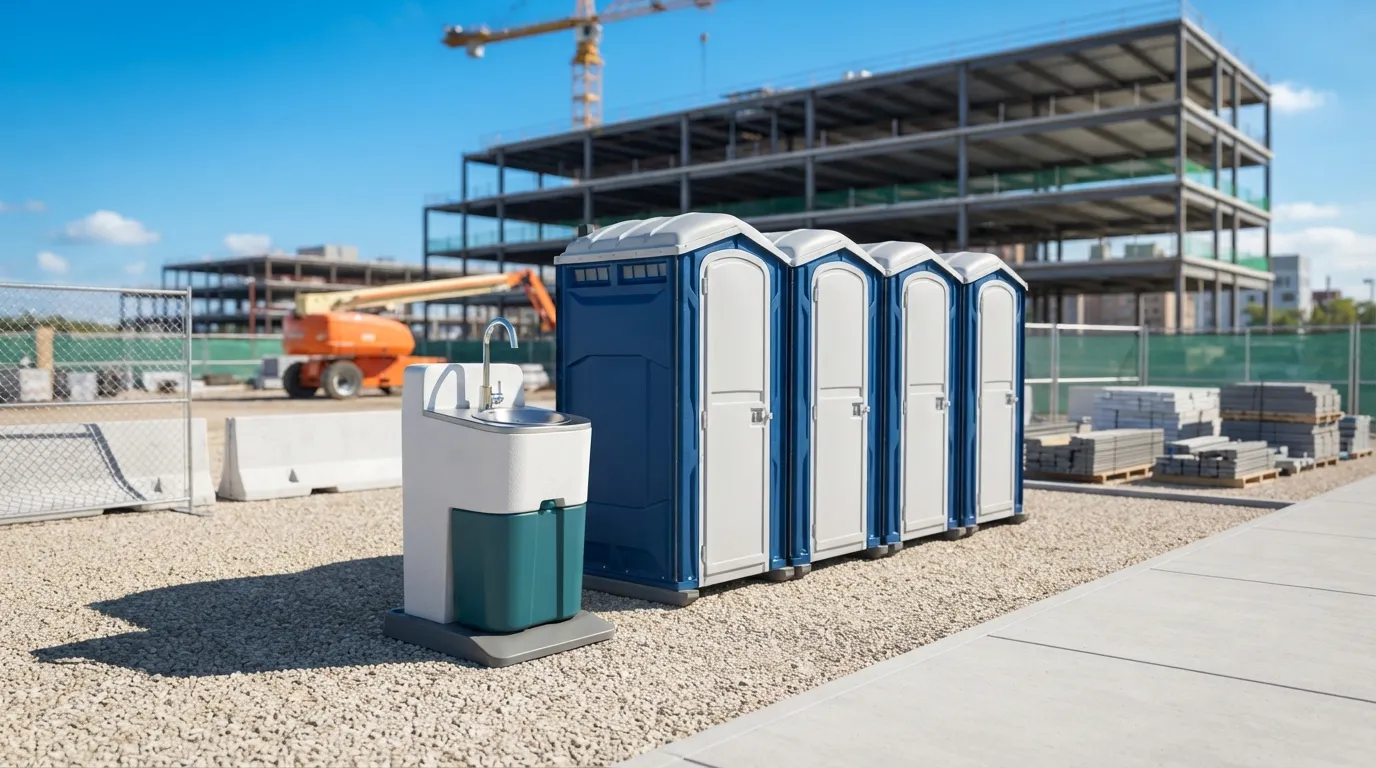
Picture the tank as a holding container, not a flush system. Every standard unit from Grand Forks Porta Pros sits on a footprint of about 44 by 48 inches and stands roughly 92 inches tall, so it fits tight jobsite corners without eating your whole laydown yard. A construction worker running to a porta potty on a break does his business, closes the lid, and the waste drops straight into the tank below, no bowl of standing water involved. The blue liquid you see is chemical treatment, doing double duty: breaking down solids and knocking back the smell until the next service. ANSI/PSAI Z4.3 sets the baseline service interval at once a week for up to 10 users over a 40 hour week, which is why most rentals in Grand Forks land on a weekly pump-out unless a crew is running heavier traffic. Vent stacks pull odor up and out rather than back through the seat. That is the core mechanism behind every portable toilet rental and porta john rental you will see parked around town.
How does a portable sink work?
A portable sink runs on its own fresh water tank, usually gravity-fed or foot-pump operated, with a separate gray water tank underneath to catch the runoff. There is no plumbing connection to a building at all, which is exactly why they show up on remote sites and outdoor events around Grand Forks. You pump or step, water comes out, you wash, and it drains into the holding tank instead of the ground. Under 29 CFR 1910.141(d)(2), handwashing setups need soap and a way to dry hands. Hand sanitizer alone does not satisfy that rule, which is why a real handwashing station rental matters more than a bottle of gel clipped to a fence post. Crews doing paint, coatings, herbicide or insecticide work fall under OSHA 1926.51(f)(1), which specifically requires washing facilities for those contaminant jobs, not general use. A portable sink rental or a hand sanitizer station rental covers different needs, and knowing which one your site requires keeps you compliant instead of guessing.
How do flushable porta potties work?
A deluxe flushable porta potty uses a small onboard fresh water tank and a hand pump or foot pedal to push a measured rinse through the bowl after each use, flushing waste down into the holding tank below. It feels closer to a real bathroom, but the water supply is still self-contained, not connected to city lines. That matters for weddings and events where guests expect something nicer than a bare-bones unit. The same idea runs how do camping porta potties work questions: camping units use the identical flush-and-hold design, just scaled down for lighter traffic over a weekend at a lake site or hunting camp near Thompson, about 12.5 miles south of Grand Forks. An ADA accessible porta potty works the same internally but adds a wider door and interior turning space. Under ADA Standards section 404.2.3, the clear door opening has to be at least 32 inches, and ADA Standards section 304.3.1 calls for a 60 inch turning circle inside. Where units are clustered, ADA Standards section 213.2 requires at least 5 percent to be accessible, never fewer than one.
What chemicals go into porta potty tanks?
The chemical in the tank is a deodorizer and digestive treatment, blue or green in color, designed to break down solids and mask odor between services. It is not the same as septic tank cleaning chemicals homeowners buy for a residential tank, and mixing product types is a bad idea. If you are searching for portable toilet chemicals near me, that is a service question, not a DIY one. Grand Forks Porta Pros handles chemical dosing as part of every rental, so you never touch the tank yourself. A residential septic tank, separately, typically needs pumping every 3 to 5 years depending on tank size and household size, and a grease interceptor gets pumped once fats, oils, grease and solids reach 25 percent of the liquid depth. That is a different system entirely from a rented unit, more in line with septic tank cleaning or septic pumping service work, and grease trap pumping for restaurants and commercial kitchens.
Toilet counts and worker ratios
| Workers on site | Toilets required |
|---|---|
| 20 or fewer | 1 |
| 20 to 199 | 1 toilet and 1 urinal per 40 workers |
| 200 or more | 1 toilet and 1 urinal per 50 workers |
That table comes straight from OSHA 1926.51(c)(1), and it is the starting point for anyone planning construction site services in Grand Forks. Ag operations follow a different rule: OSHA 1928.110 requires one facility per 20 hand-labor employees, reachable within a quarter mile walk, which matters for farm and agricultural restrooms out past Emerado, 14.2 miles west of town. For help sizing a job, check how many porta potties do I need or the full OSHA portable toilet requirements breakdown.
How often do porta potties get serviced?
Most rentals run on a weekly pump-out, based on the ANSI/PSAI Z4.3 standard of once a week for up to 10 users over 40 hours. High-traffic events or larger crews often need more frequent visits. See how often are porta potties cleaned for scheduling detail.
Do porta potties smell?
They can, especially in heat, but proper venting and chemical dosing keep it manageable between services. A unit serviced on schedule and not overloaded rarely smells strong. Full details live on do porta potties smell.
Can I rent a porta potty for just one weekend?
Yes. Weekend rates run higher per day than a full week since you are paying for delivery and pickup over a short window. Check porta potty rental per day for how daily and weekend pricing compares.
Is a permit required to place a porta potty in Grand Forks?
That depends on placement, especially in the right of way, and needs confirming with the city directly. See porta potty permit requirements before you set a location.
What is the difference between a standard unit and a restroom trailer?
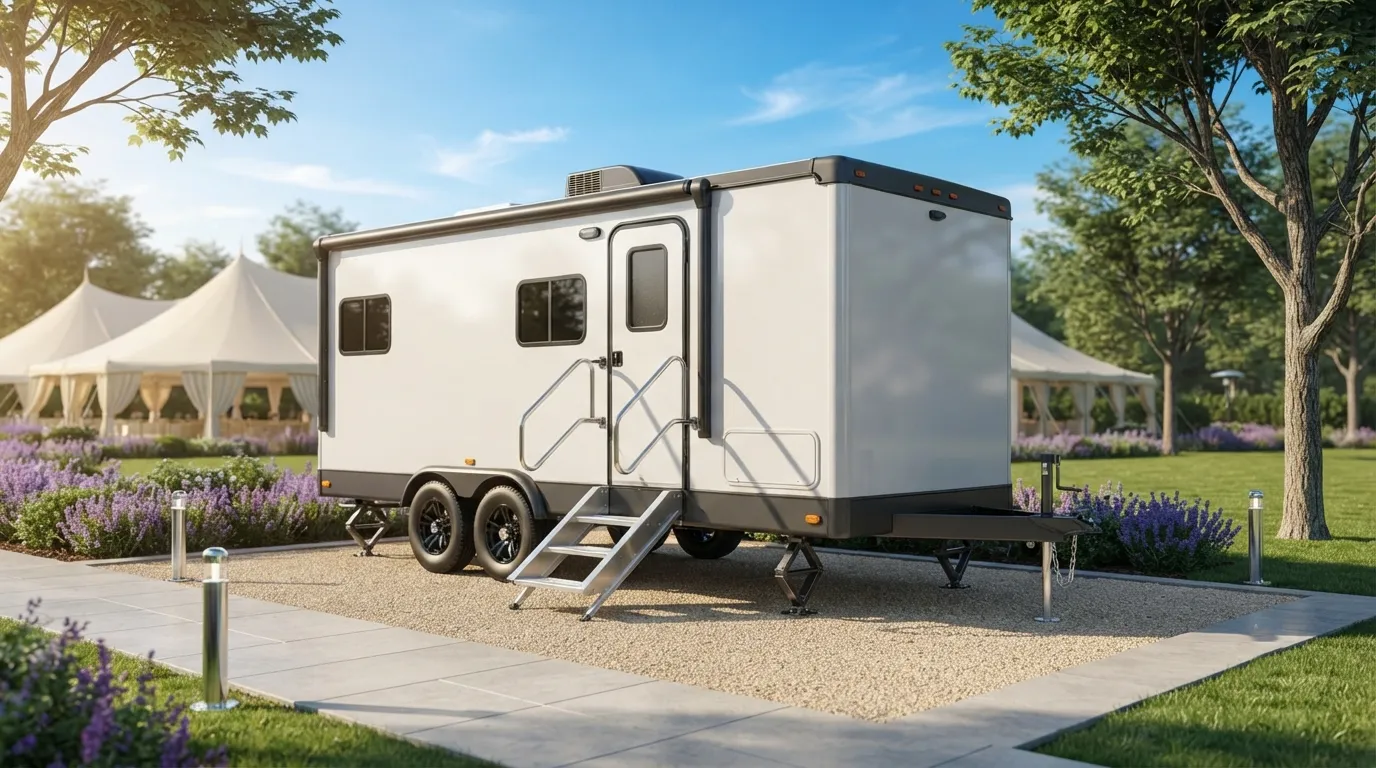
A standard unit is a self-contained tank-and-seat setup with no water hookup. A restroom trailer rental has flushing toilets, sinks and sometimes climate control, built for events wanting a nicer experience. Compare options on portable restroom rental.
Next step
Get a delivery date
Tell us the address, the dates and the headcount. We size the order and confirm the route.