
How Many Porta Potties Do I Need for a Construction Site?
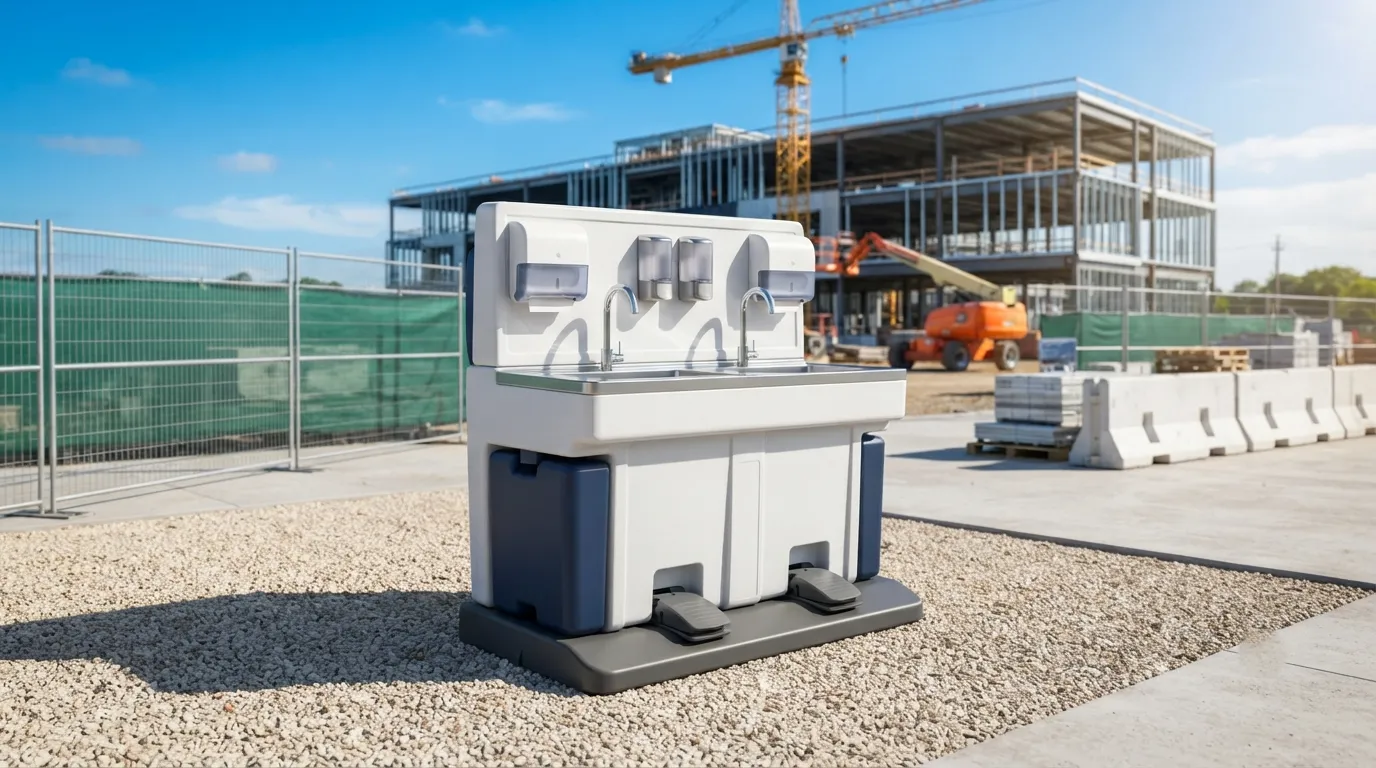
Start with the OSHA 1926.51(c) table and build up from your crew size. Twenty workers or fewer needs one toilet facility. From 20 to 39 workers, you need one toilet seat and one urinal. At 40 to 59 workers, add a second set, and OSHA scales it at one seat and one urinal per 40 workers up through that range. Once a job tops 200 workers, the ratio eases to one seat and one urinal per 50 workers. A framing crew of 15 in Grand Forks needs exactly one standard porta potty rental parked near the trailer. A larger build with 45 workers across two shifts needs two units minimum, and most supervisors round up rather than risk a line at break time. Pair the toilet with potable water under OSHA 1926.51(a)(1), and if the crew is spraying paint, coatings, herbicides or insecticides, OSHA 1926.51(f)(1) requires washing facilities on top of the toilet count, not instead of it. Check the OSHA portable toilet requirements page before you order, and use the how many porta potties do i need math above as your starting ratio, not your ceiling.
How Many Porta Potties Do I Need for an Event?
| Guests | Hours | Standard units |
|---|---|---|
| 50 | 4 | 1 |
| 100 | 4 | 2 |
| 250 | 4 | 4 to 5 |
| 500 | 6 | 8 to 10 |
Alcohol changes the math fast. Serving beer or wine pushes bathroom trips up, so add roughly one extra unit per 100 guests once a bar opens. A wedding of 150 running 6 hours with a bar should plan for 4 units instead of 3. Multi-day festivals need servicing built into the plan, not an afterthought, since a unit sized for a single afternoon will not hold up over three days without a pump-out. For a backyard wedding near East Grand Forks, 4.7 miles east of Grand Forks, two standard porta potty rental units plus one ADA accessible porta potty covers 100 guests for an evening reception. Bigger festivals lean on event restroom rental planning and often add a restroom trailer rental once headcount clears 300. Check the festival restroom rental guide for staged, multi-day layouts.
Do I Need an ADA Accessible Unit?
Yes, if you're clustering portable toilets for public use. ADA Standards section 213.2 requires at least 5 percent of clustered units be accessible, and never fewer than one. A jobsite with four standard units in Grand Forks needs at least one accessible unit in that group. The accessible unit itself has to meet its own specs: a 60 inch turning circle under ADA Standards 304.3.1, a 32 inch clear door opening per ADA Standards 404.2.3, and a stable, slip resistant floor under ADA Standards 302.1. Reach ranges matter too, since ADA Standards 308.2.1 caps a forward reach at 48 inches high and 15 inches low, and door hardware has to work with one hand under ADA Standards 309.4. Most event planners in Grand Forks order the ADA accessible porta potty alongside standard units rather than as an afterthought, since retrofitting a layout after guests arrive isn't an option. Read the full ADA restroom requirements page before finalizing a site map, especially if the venue sits on a sloped lot, since any ramp has to hold to a 1:12 slope under ADA Standards 405.2.
How Long Can a Job Run on One Unit?
ANSI/PSAI Z4.3 sets the baseline service interval at once per week for up to 10 users across a 40 hour week. A two-person crew on a home remodel can often stretch a single unit the full week without trouble. A 20-person crew hits that ceiling fast and needs either more units or twice-weekly service. Longer jobs change the pricing structure too: a monthly porta potty rental makes more sense than renting by the day once a project runs past a few weeks. Check the porta potty rental cost breakdown and the porta potty rental per day page to compare against a longer commitment. Winter jobs in Grand Forks add another wrinkle, since holding tanks need extra attention in freezing weather. The porta potty in winter guide covers what changes when temperatures drop, and it's worth reading before you lock in a season-long rental.
What About Dumpster Size Alongside the Toilets?
Most site service quotes bundle a dumpster with the portable toilets, so size both at once. A 10 yard dumpster runs about 10 by 8 feet on the ground and holds roughly 1,360 cubic feet, right for a single-room cleanout. A 20 yard dumpster is about 20 feet long and holds close to 2,700 cubic feet, handling 4 to 6 tons of mixed construction debris on a typical job. A 30 yard dumpster steps up to holding around 4,000 cubic feet and can take roughly 5 to 7 tons depending on the material, useful for a full roof tear-off or a larger remodel. A 40 yard dumpster holds close to 5,400 cubic feet and can carry up to about 8 tons on the right load. Weight limits shift with material density, so check the dumpster weight limits page before loading shingles or concrete. Compare footprints on the dumpster sizes and dimensions page, and note that a roll-off delivery needs about 60 feet of straight clearance behind the truck to set the container down safely.
Where Should Units Go on Site?
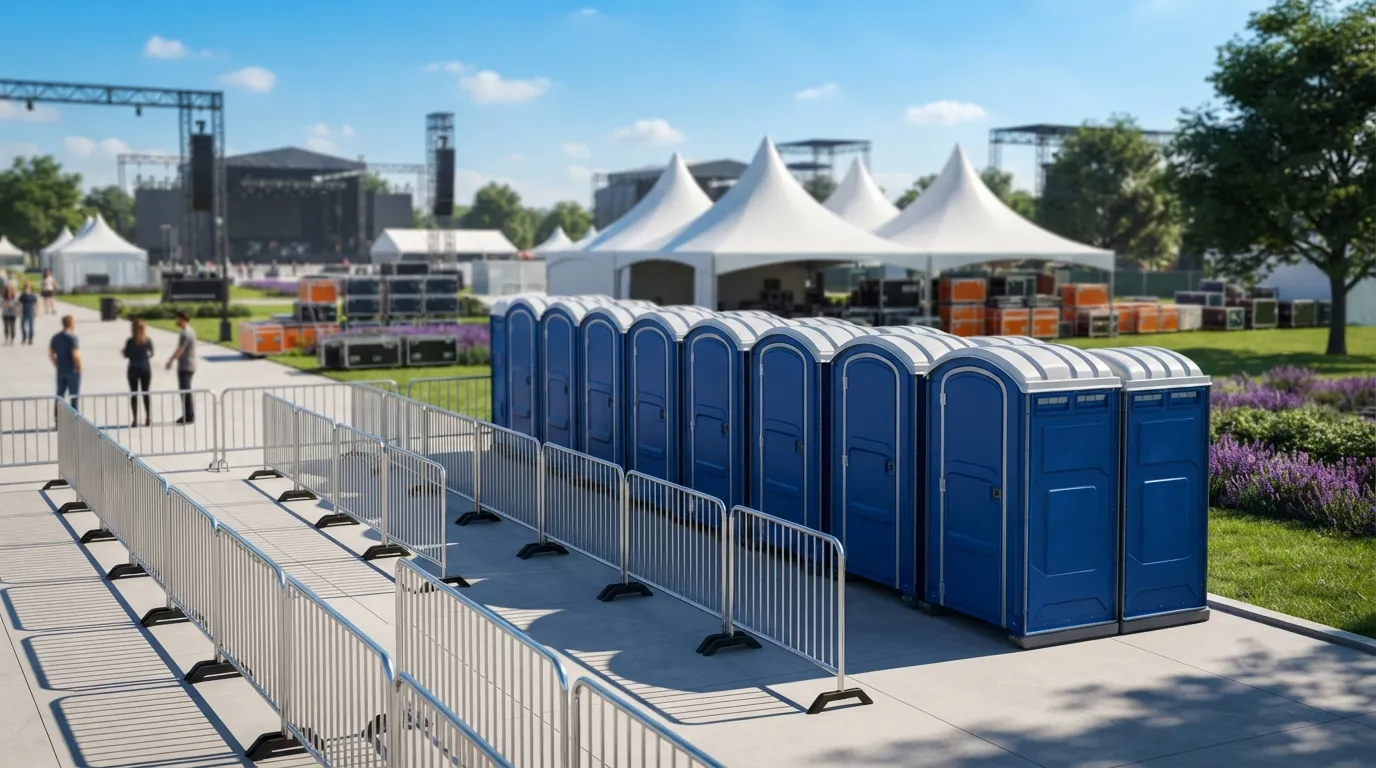
Placement drives usage more than raw count. A unit tucked behind a fence line 200 feet from the work area gets skipped, and workers improvise instead, which nobody wants. Keep units within a short walk of the active work zone, on stable, level ground, with a 36 inch clear route in front per ADA Standards 403.5.1 if any unit is accessible. If the site borders a public sidewalk or right of way, placement there needs confirming with the City of Grand Forks before delivery, since public right of way rules vary and this page won't guess at one. The porta potty placement guide covers ground conditions, wind exposure and service truck access in more detail. For sites near Thompson, 12.5 miles south of Grand Forks, or Manvel, 13.3 miles north, factor driveway length and turnaround space into the delivery plan, since a tight farm lane can rule out certain trailer sizes.
Should I Rent a Restroom Trailer Instead?
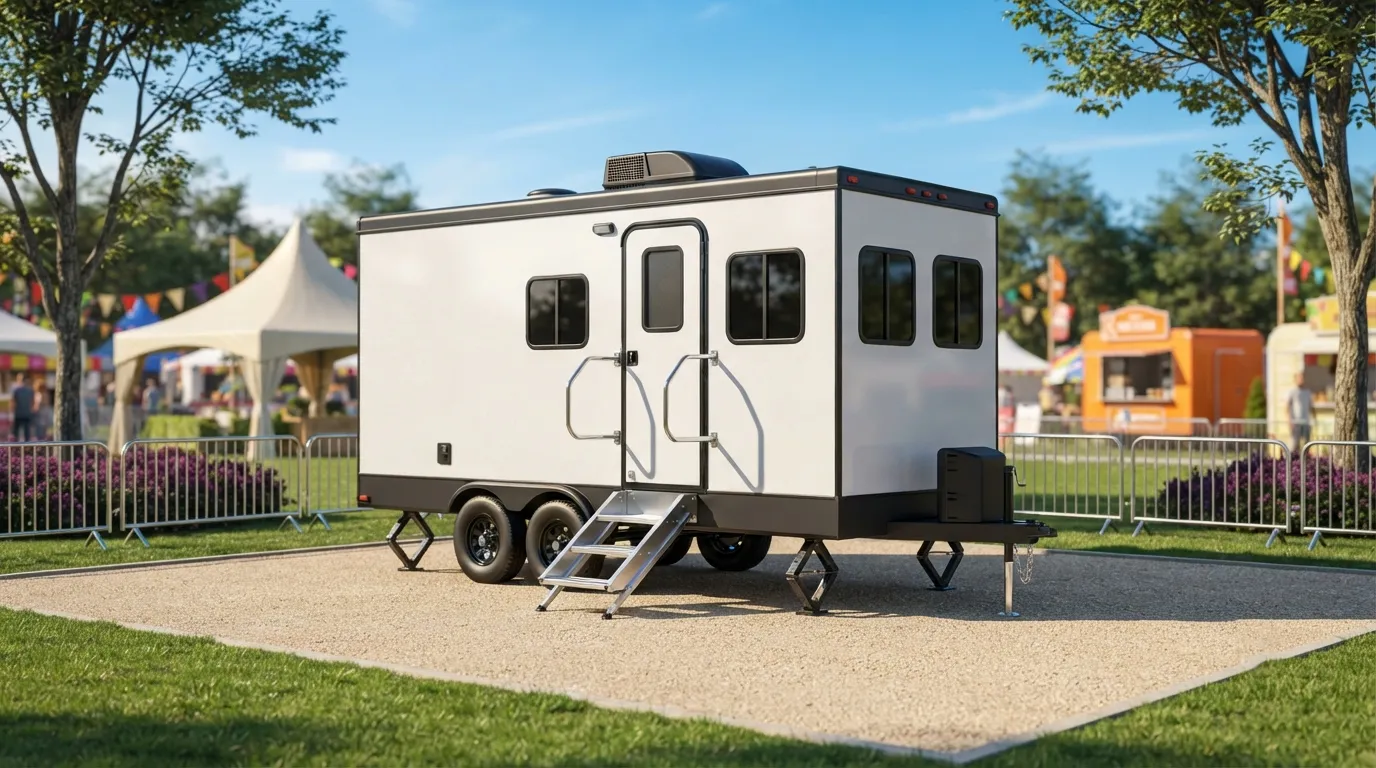
Once headcount or duration climbs, a trailer often beats stacking standard units. A 2 stall restroom trailer suits a mid-size wedding or a two-day jobsite push, while an 8 stall restroom trailer handles a festival crowd without a line forming at every unit. Trailers also solve the handwashing question outright, since 29 CFR 1910.141(d)(2) requires soap and towels or a hand drying device, not sanitizer alone, and most trailers come with running water built in. If your event doesn't need a full trailer, a standalone handwashing station rental or portable sink rental covers that requirement on its own. Compare the restroom trailer rental cost against stacking multiple standard units. For farm functions or fairgrounds work near Emerado, 14.2 miles west of Grand Forks, a trailer often clears rough ground better than several small units spaced across a field.
How many porta potties do I need for 100 guests?
Plan on two standard units for a 4 hour event with 100 guests, plus one ADA accessible unit if the units are clustered together. Add a third if alcohol is served or the event runs past 6 hours. Grand Forks weddings and graduation parties usually land in this range.
How many tons does a 30 yard dumpster hold?
A 30 yard dumpster typically holds around 5 to 7 tons, depending on what's inside. Mixed construction debris and shingles weigh more than bulky household junk, so check the dumpster weight limits page before loading a heavy tear-off job.
How many cubic feet are in a 20 yard dumpster?
A 20 yard dumpster holds close to 2,700 cubic feet and measures about 20 feet long on the ground. It typically handles 4 to 6 tons, making it a common choice for a kitchen remodel or a garage cleanout in Grand Forks.
How many toilets does OSHA require per worker?
OSHA 1926.51(c) requires one toilet for 20 workers or fewer, then one seat and one urinal per 40 workers as the crew grows, easing to one per 50 workers at 200 or more. Always round up when your headcount sits near a bracket line.
Do I need extra units if we're serving alcohol at an event?
Yes. Alcohol increases restroom trips, so add roughly one extra standard unit per 100 guests once a bar is open. A 150-guest wedding with a bar should plan for around 4 units instead of the 3 it would need dry.
How many cubic feet are in a 40 yard dumpster?
A 40 yard dumpster holds close to 5,400 cubic feet and can carry up to about 8 tons on the right load. It suits large-scale demolition or a full commercial cleanout better than smaller sizes on the dumpster sizes and dimensions page.
Next step
Get a delivery date
Tell us the address, the dates and the headcount. We size the order and confirm the route.